Introduction: Why Accessible Self-Service Kiosks Matter
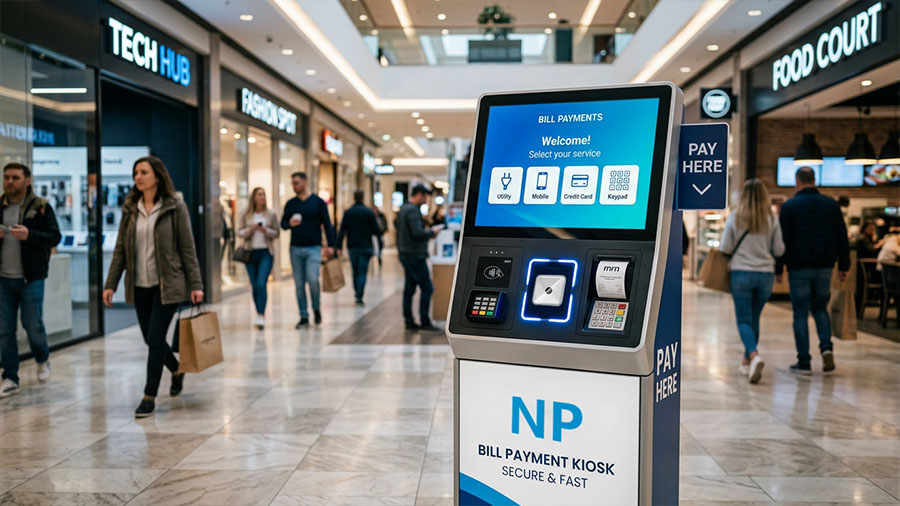
Accessible self-service kiosks are reshaping how people interact with technology in daily life. From banking and retail to transportation and healthcare, these kiosks provide equal access for people with disabilities. Traditional self-service machines often neglect the needs of disabled users, leaving them dependent on others. By integrating wheelchair-accessible layouts, voice guidance, and intuitive interfaces, accessible kiosks enable independence and improve the overall user experience.
Why Inclusive Design Is Essential for Accessible Self-Service Kiosks
Inclusion of people with disabilities is not only a social responsibility but also a global imperative that directly influences how technology is designed. According to the World Health Organization (WHO), approximately 1.3 billion people worldwide—about 16% of the global population—live with some form of disability. Regional statistics further underscore this reality. For example, there are over 80 million people with disabilities in Africa, while in the Middle East and North Africa (MENA) region, disability rates vary significantly, with some countries exceeding 5%.
In modern society, creating an inclusive environment is no longer an optional choice. Whether in public infrastructure, retail spaces, workplaces, or digital services, accessible design must be integrated into every touchpoint. This principle is particularly critical when developing accessible self-service kiosks, as these devices are increasingly used in daily interactions.
To build truly inclusive self-service kiosk solutions, we adopt a user-centered approach, prioritizing accessibility at every stage, which plays a key role in driving better design and broader inclusivity.
Accessibility is no longer a secondary feature—it is becoming a standard expectation. Businesses that embrace inclusive design not only comply with global accessibility trends but also create better user experiences for everyone.
Global Deployment & Market Trends
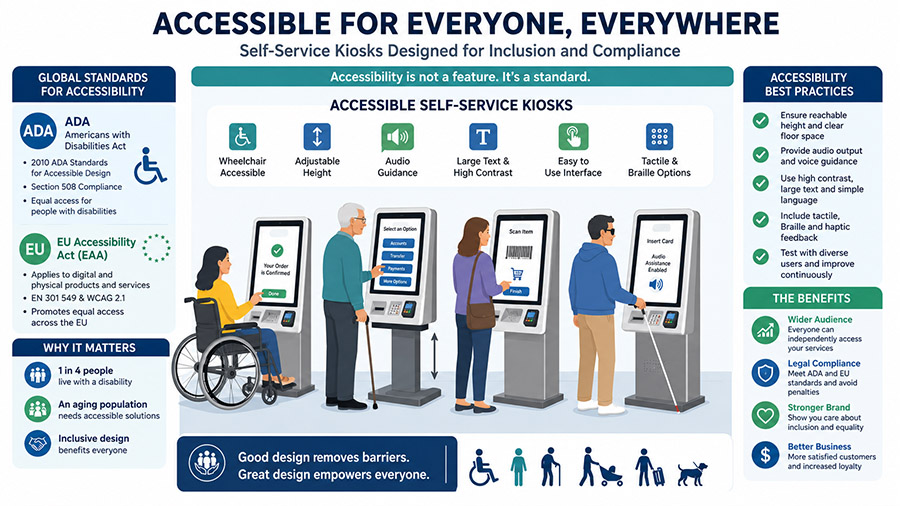
● United States: Driven by the ADA (Americans with Disabilities Act), around 60% of public self-service kiosks are now required to meet accessibility standards. Annual procurement for new accessible kiosks exceeds 15,000 units in banking and retail sectors.
● European Union: EU accessibility directives and EN 301 549 standard have led to over 10,000 accessible kiosks deployed across public transportation, healthcare, and retail in the past three years.
● Japan: The Accessible Design Act encourages businesses to deploy accessible self-service kiosks. Over 5,000 kiosks are now operational in retail and government services.
● Australia: According to the Disability Discrimination Act, public facilities are required to install accessible kiosks. The procurement rate has increased by 30% annually since 2021.
These numbers highlight growing global demand, creating opportunities for manufacturers who can deliver compliant, high-quality solutions.
Real-Life Impact Across Industries
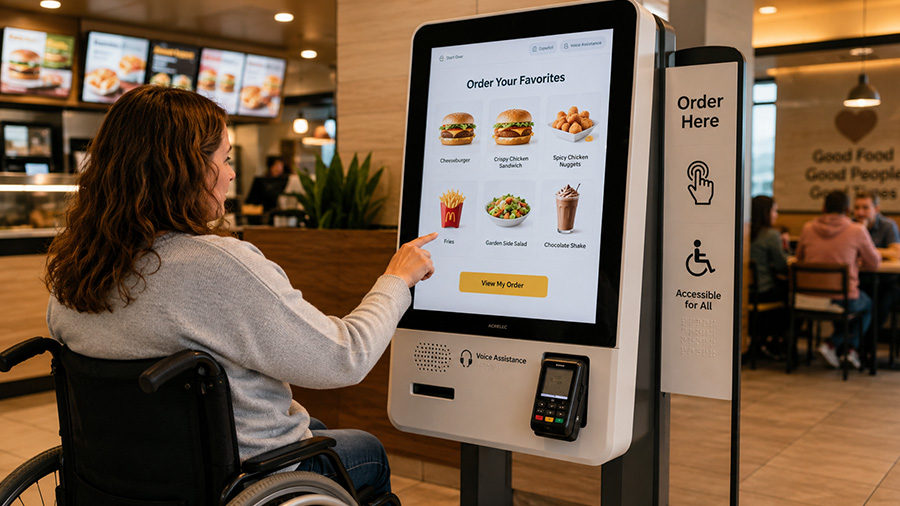
● Food & Beverage: Accessible kiosks in fast-food restaurants and coffee shops allow wheelchair users and visually impaired customers to order independently. Example: In the U.S., 40% of major fast-food chains have deployed accessible kiosks, increasing satisfaction among disabled customers by over 20%.
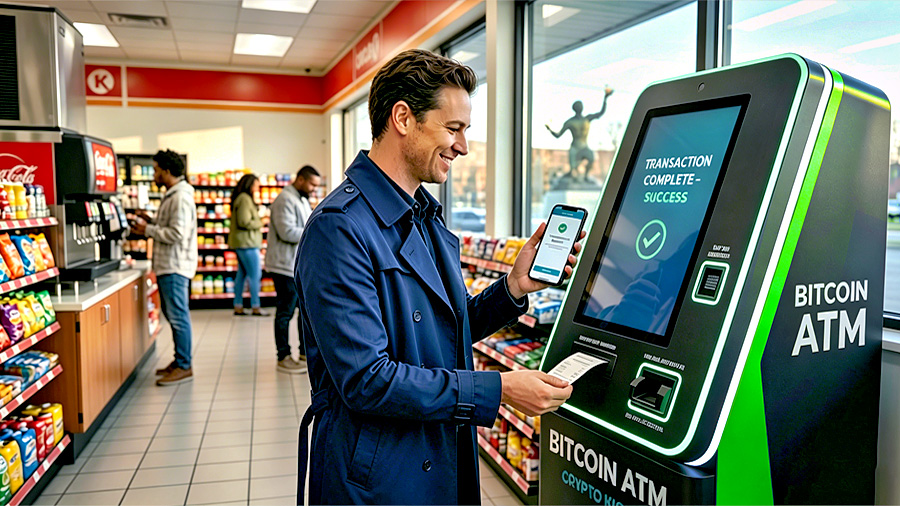
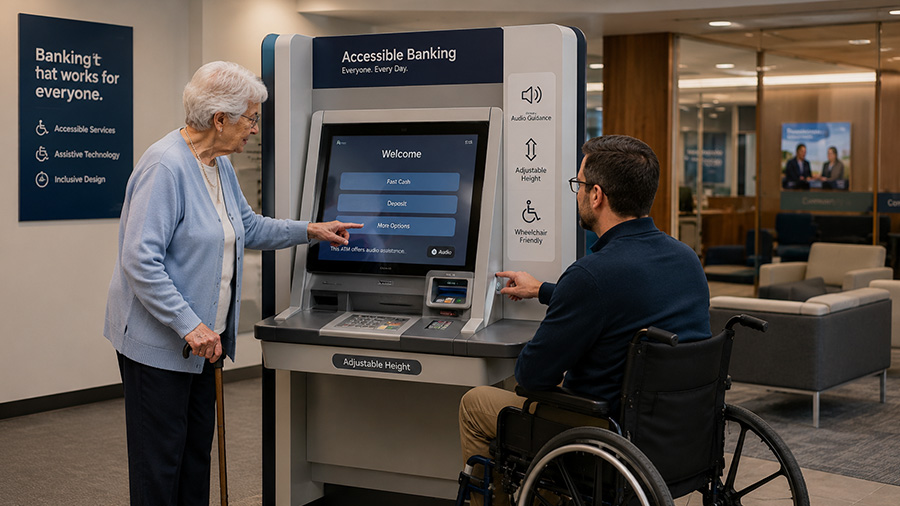
● Banking & Finance: ATMs with adjustable height, tactile keys, and audio assistance enable disabled and elderly users to handle transactions without staff assistance.
● Public Transportation: Subway stations and airports in Europe have introduced accessible ticketing kiosks, equipped with large buttons, Braille instructions, and voice navigation, serving millions of disabled commuters annually.
● Healthcare & Government Services: Hospitals and government offices are integrating accessible self-service kiosks for registration, payments, and information access, improving efficiency and inclusivity.
Advantages of Accessible Self-Service Kiosks
1. Enhanced User Experience: Interfaces designed for people with disabilities improve operational ease.
2. Expanded Customer Base: Independently usable kiosks attract more customers, including elderly and disabled users.
3. Corporate Social Responsibility: Showcases commitment to inclusion and accessibility.
4. Operational Efficiency: Reduces staff assistance requirements, improving workflow.
5. Compliance with International Standards: Lowers legal risks while expanding into regulated markets.
Our Expertise in Accessible Kiosk Manufacturing
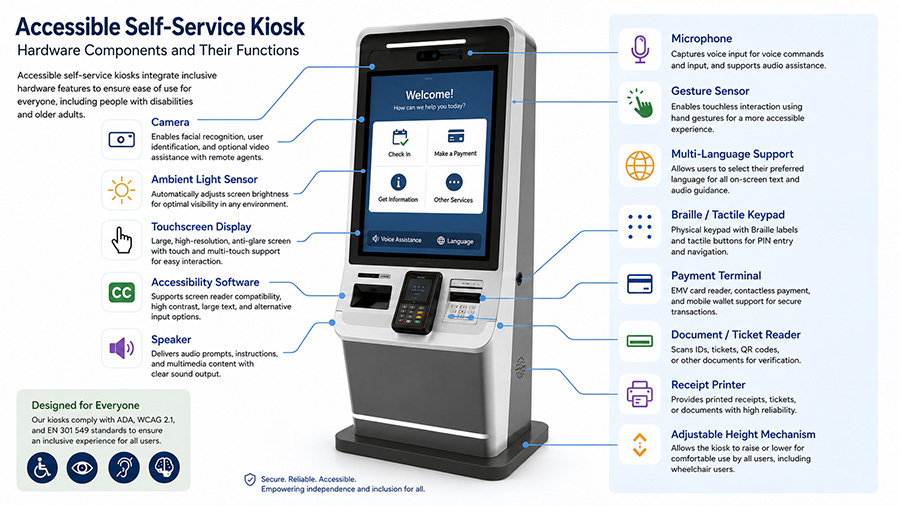
Our company has over 10 years of experience in designing and manufacturing self-service kiosks that meet the needs of all users, including people with disabilities. Key features of our accessible kiosks include:
Adjustable Screen Height: Allows wheelchair users to comfortably access touchscreens.
Voice Assistance & Audio Output: Supports visually impaired users to navigate the system independently.
Large Tactile Buttons & Braille Keypads: Enhance usability for visually impaired customers.
High-Contrast Touchscreens: Improve visibility for low-vision users.
Durable, Anti-Glare Display: Ensures clarity in various lighting conditions.
Multi-Language Support: Supports diverse communities, including sign language interface integration.
Customizable Peripheral Devices: Barcode scanners, card readers, and receipt printers positioned for accessibility.
Remote Management & Monitoring: Ensures uptime and provides analytics for usage optimization.
Our production capabilities allow mass deployment while maintaining ADA, EU, and ISO accessibility standards, making our kiosks ideal for global markets.
Conclusion
Accessible self-service kiosks are more than a technological trend—they are a social necessity. Supported by global laws and increasing market adoption, these kiosks enhance independence, improve convenience, and reflect corporate social responsibility. Our company provides professionally engineered solutions with hardware and software optimized for people with disabilities, helping businesses meet compliance requirements and customer expectations worldwide.
The development of kiosk technology clearly reflects this shift. Early self-service machines were designed with limited functionality and little consideration for user diversity. Today, advancements in hardware and software make it possible to create accessible self-service kiosks that accommodate a wide range of physical and cognitive needs.
Accessibility is no longer a secondary feature—it is becoming a standard expectation. Businesses that embrace inclusive design not only comply with global accessibility trends but also create better user experiences for everyone.